
INDUSTRIAL REAL ESTATE DEVELOPMENT TRENDS
FOR THE 2025–2030 PERIOD
In recent years, industrial real estate in Vietnam has become one of the fastest-growing segments of the property market. The global supply chain shift, increasing foreign direct investment (FDI), and rapid industrialization have generated rising demand for industrial parks with modern infrastructure and integrated manufacturing ecosystems.
The 2025–2030 period is expected to remain a strong growth phase for Vietnam’s industrial real estate sector, with several emerging trends shaping the market.
1. Vietnam Continues to Attract Strong FDI Inflows
One of the key drivers behind the growth of industrial real estate is foreign direct investment (FDI).
As global manufacturers diversify supply chains and seek new production locations, Vietnam has emerged as a strategic destination thanks to:
- Favorable geographic position within regional supply chains
- Competitive labor costs
- Stable political environment
- Free Trade Agreements (FTAs) with major global economies
These advantages are expected to sustain increasing demand for industrial land and ready-built factories during the 2025–2030 period.
2. Industrial Relocation Toward Satellite Regions
As industrial land in major urban centers becomes increasingly limited, many investors are shifting toward satellite regions with greater development potential.
In Southern Vietnam, provinces such as Long An, Tay Ninh, Binh Phuoc, and Ba Ria – Vung Tau are attracting growing interest from manufacturing enterprises due to:
- Abundant industrial land reserves
- Competitive investment costs
- Rapidly improving transportation infrastructure
In particular, Duc Hoa, Tay Ninh Province (formerly Long An Province), is emerging as one of the region’s new industrial hubs thanks to its strategic gateway position west of Ho Chi Minh City and strong connectivity to the Mekong Delta, seaports, and international border gates.
3. Sustainable Industrial Park Development
A major trend in the coming years is the development of green and sustainable industrial parks.
As international enterprises place greater emphasis on environmental standards, modern industrial parks are increasingly focusing on:
- Standardized wastewater treatment systems
- Expanded green spaces and landscaping
- Efficient energy utilization
- Environmentally friendly infrastructure planning
These factors not only improve the manufacturing environment but also enhance the ability to attract international investors.
4. Logistics and Transportation Infrastructure Continue to Improve
The growth of industrial real estate is closely linked to transportation and logistics infrastructure.
Between 2025 and 2030, numerous large-scale infrastructure projects are expected to be implemented, including:
- Interregional expressways
- Ring roads connecting major urban centers
- Seaport systems and logistics hubs
Infrastructure improvements help businesses optimize transportation costs and strengthen supply chain efficiency, thereby driving demand for industrial park investment.
5. The Rise of Integrated Industrial–Urban Ecosystems
Modern industrial parks are no longer simply manufacturing zones; they are becoming centers of integrated economic and social ecosystems.
Industrial development often drives:
- Job creation for local workers
- Residential and urban development
- Expansion of commercial and logistics services
- Improvement of transportation infrastructure and social amenities
As a result, many industrial parks today are planned alongside urban development and surrounding residential communities.
The Role of Industrial Infrastructure Developers
As the industrial real estate market continues to expand, the role of industrial infrastructure developers becomes increasingly important.
Well-planned industrial parks with integrated infrastructure and long-term development strategies create favorable conditions for businesses to invest and expand production.
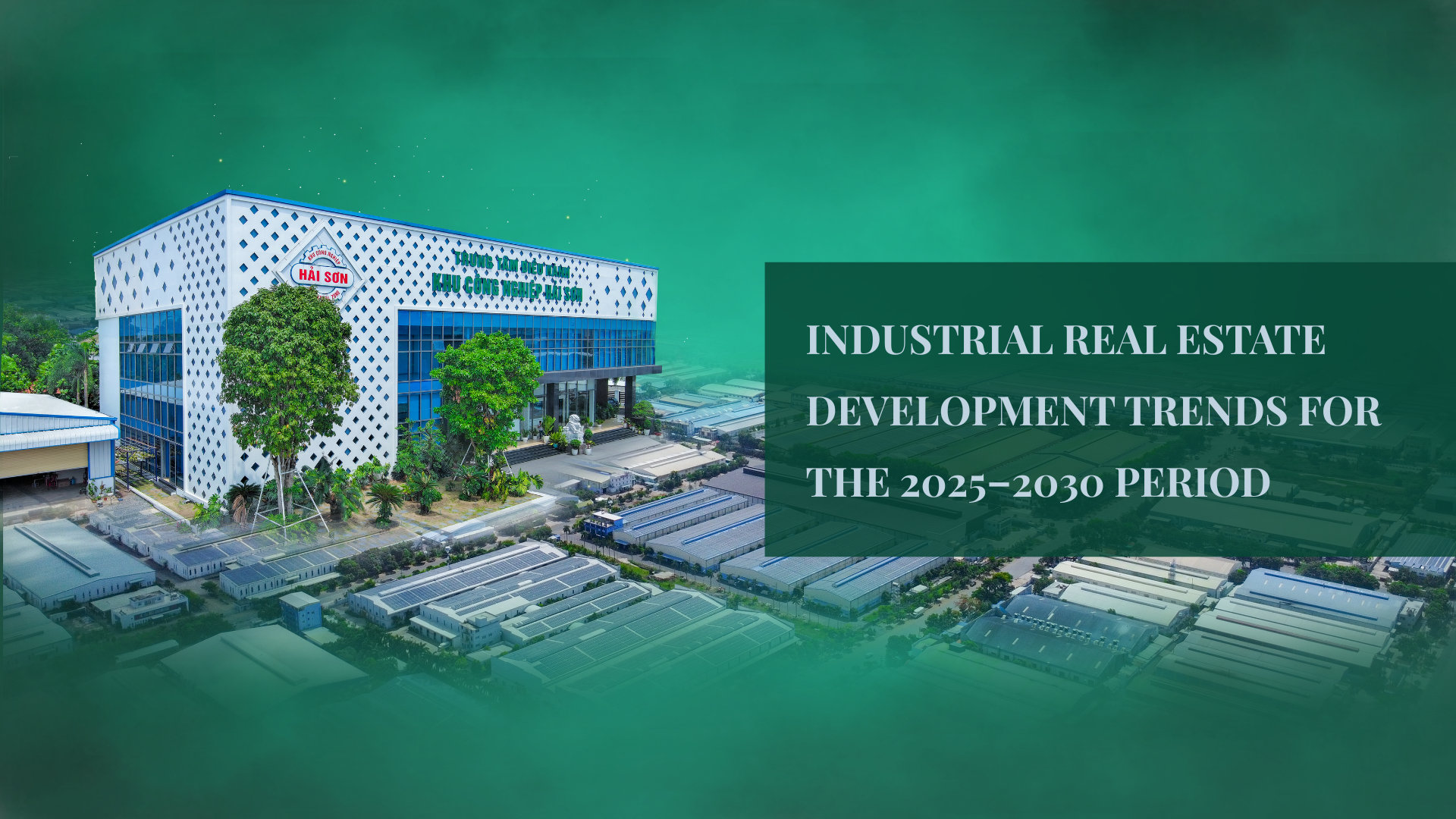
In Duc Hoa, industrial park projects developed by Hai Son are gradually contributing to the completion of the region’s industrial ecosystem. With strategic connectivity and synchronized infrastructure investment, these industrial parks not only meet manufacturing demands but also contribute to local socio-economic development.
During the 2025–2030 period, Vietnam’s industrial real estate market is expected to maintain strong growth momentum, supported by global supply chain shifts, FDI inflows, and transportation infrastructure improvements.
The development of industrial parks not only provides manufacturing space for businesses but also promotes regional economic growth, urban development, and industrial ecosystem expansion.
With a strategic focus on integrated infrastructure investment and sustainable development, projects developed by Hai Son Co., Ltd. are expected to become a preferred destination for investors in the Duc Hoa area in the years ahead.